
If your child’s last eye exam came back with a stronger prescription than the year before, you might have heard your optometrist mention myopia control for kids. The pitch sounds promising. There are eye drops, special contact lenses, and even glasses that can supposedly slow how fast a child becomes nearsighted. But does any of it actually work, or is it expensive optimism? The research has come a long way over the last decade, and the short answer is yes, several treatments meaningfully slow myopia. The longer answer is more interesting.
What myopia control actually means
Myopia, or nearsightedness, happens when the eyeball grows too long from front to back. Light focuses in front of the retina instead of on it, and far-away things go blurry. Once the eye lengthens, it doesn’t shrink back. So myopia control can’t reverse a prescription that’s already there. The goal is to slow how fast the eye keeps elongating between now and the late teens.
The stakes are bigger than just glasses thickness. High myopia, generally anything past -6.00 diopters, raises the lifetime risk of retinal detachment, glaucoma, myopic maculopathy, and cataracts. Cutting a child’s final prescription from -8.00 down to -4.00 isn’t a convenience. It significantly lowers the chance of serious eye problems in their 50s and 60s. That’s the real prize.
A modern pediatric eye care practice will track axial length, the actual physical length of the eye, in addition to prescription. Watching that number is how doctors tell whether treatment is working long before changes show up in the glasses.
The four main treatments and what the research shows
Four treatments have meaningful evidence behind them, and the right one depends on the kid.
Low-dose atropine drops are the simplest option. A drop in each eye at bedtime, usually 0.025% or 0.05% concentration. The LAMP study out of Hong Kong found that 0.05% atropine slowed myopia progression by more than half compared to placebo over multi-year follow-up. Side effects at low doses are minimal. Mild light sensitivity and slight reading difficulty can happen but usually fade.
Orthokeratology, or Ortho-K, uses rigid contact lenses worn overnight that gently reshape the cornea. Kids wake up seeing clearly without correction during the day. Studies like ROMIO and TO-SEE put the slowing effect at roughly 40 to 50 percent. It’s especially good for active kids who hate glasses.
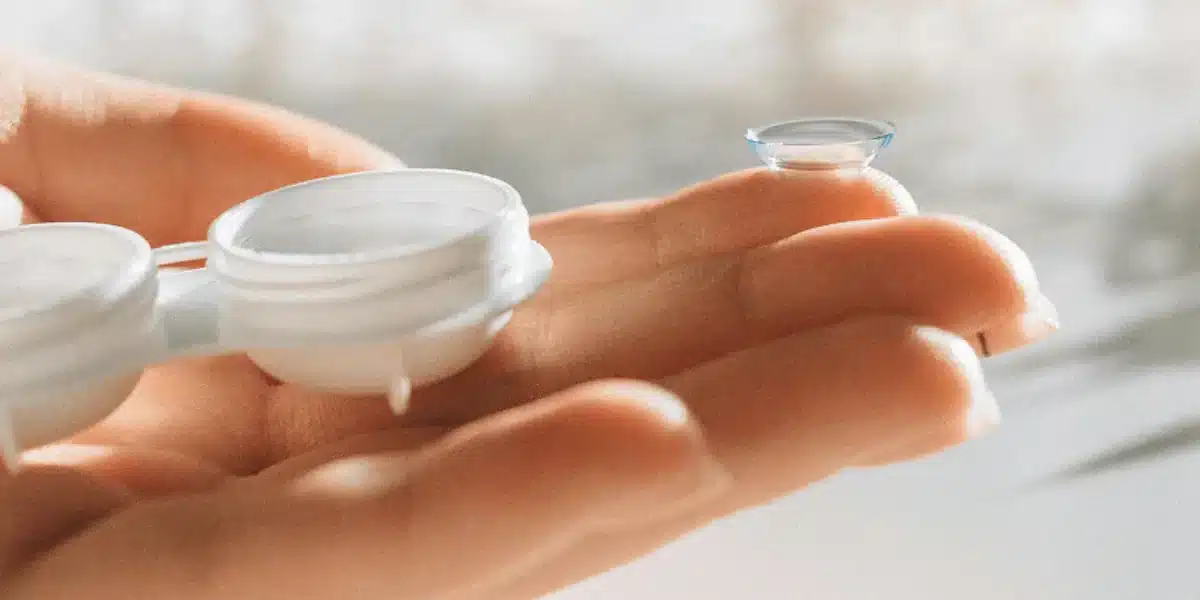
MiSight 1 day soft contacts were the first FDA-approved myopia control lenses in the US. The three-year MiSight clinical trial, published in 2019, showed a 59 percent reduction in myopia progression. Kids wear them like normal daily contacts.
Specialty spectacle lenses like HOYA’s MiYOSMART (DIMS) and Essilor’s Stellest (HALT) use tiny segments around the lens to defocus peripheral light and signal the eye to slow growth. Independent studies show similar 50 to 60 percent slowing. These lenses are widely used internationally and have been arriving in US practices through approved channels.
A practice that runs a real myopia management program will usually offer at least two of these and tailor the choice to the child’s prescription, age, and lifestyle.
How to know if your child is a candidate
Most kids who benefit from myopia control are between 6 and 14 years old, when myopia tends to progress fastest. The earlier you start, the more years of progression you can blunt.
A few things make a child a stronger candidate. A change of -0.50 diopter or more per year on annual exams. A family history of high myopia, since genetics is a major factor. Lots of close-up work and limited outdoor time. Onset before age 8 is also a red flag, because kids who become nearsighted that young usually keep progressing fast.
The way to know for sure is a comprehensive eye exam that includes axial length measurement. If the doctor isn’t measuring axial length, they’re flying blind on whether treatment is working. Most kids who start myopia management see noticeable slowing within the first six months, and parents typically know by year one whether the approach is paying off.
The lifestyle piece nobody can skip
None of the treatments above replace the basics. Outdoor time matters more than most parents realize. Multiple studies, including the well-known Sydney Myopia Study, found that kids who spend two or more hours a day outside have significantly lower rates of myopia onset. The mechanism appears to involve bright outdoor light triggering dopamine release in the retina, which slows eye growth.
The 20-20-20 rule helps too. Every 20 minutes of close work, look at something 20 feet away for 20 seconds. It gives the focusing system a break. Reducing recreational screen time, especially close-held phones, helps in most cases as well.
The team at Clear & Company Eye Care often starts the conversation about outdoor time before recommending any clinical treatment. Lifestyle changes are free, and they amplify whatever drug or lens you choose later. The doctors who oversee these programs usually want to see kids twice a year once myopia management starts, so they can track progression and adjust if needed.
Myopia control for kids isn’t a magic switch. It’s a steady, multi-year approach that combines clinical treatment with everyday habits. The research is strong enough now that doctors who follow children’s eye health closely have stopped treating it as optional. If your child’s prescription has been climbing each year, it’s worth asking about myopia management Charlotte NC families have access to. You can book a consultation and walk out with a real plan instead of just stronger lenses.
FAQs
- At what age should my child start myopia control?
Most experts recommend starting as soon as myopia is diagnosed and progressing, usually between ages 6 and 12. Earlier is better because progression tends to be fastest in younger kids. That said, treatment can still help teenagers whose prescription is moving each year. The key signal is yearly change, not age.
- How much does myopia control cost, and does insurance cover it?
Costs vary by treatment. Atropine drops run roughly $30 to $80 a month from a compounding pharmacy. Ortho-K and MiSight typically cost $1,500 to $2,500 per year, including visits and lenses. Vision insurance rarely covers myopia management directly, though some plans help with the underlying exams or fitting fees.
- Can my child stop myopia control once their prescription stabilizes?
Most kids stop active treatment in their late teens, once the prescription has been stable for a year or two. Some doctors recommend tapering rather than stopping abruptly, especially with atropine, since rebound progression has shown up in some studies. Your eye doctor will track stability before recommending the off-ramp.
- Are these treatments safe for long-term use?
Yes, based on the research available. Low-dose atropine has been studied for over a decade with no significant safety concerns. Ortho-K and MiSight lenses are FDA-approved for daily use in children. As with any contact lens, the main risk is corneal infection from poor hygiene, which is why proper lens care training matters.
- Will my child still need to wear regular glasses or contacts?
Depends on the treatment. Atropine drops alone don’t correct vision, so kids still need glasses or contacts during the day. Ortho-K eliminates the need for daytime correction in most cases. MiSight and specialty spectacle lenses correct vision and slow progression at the same time.
- What happens if we don’t do anything about my child’s myopia?
The prescription will keep growing each year until the eye stops elongating, usually in the late teens. The end prescription tends to be a couple of diopters higher than it would be with treatment. The bigger long-term concern is the elevated risk of retinal detachment, glaucoma, and myopic maculopathy that comes with high myopia in adulthood.
At Clear & Company Eye Care in Harrisburg, NC, we can help. Explore our myopia control services or book an appointment online — or call (704) 997-2020.