
Conditions we treat
Pink eye, or conjunctivitis, is inflammation or infection of the thin membrane that covers the white part of the eye and lines the inside of the eyelids. When the tiny blood vessels become irritated, they become more visible, making the eye look red or “pink.” It’s usually not serious, but understanding it early can make all the difference.

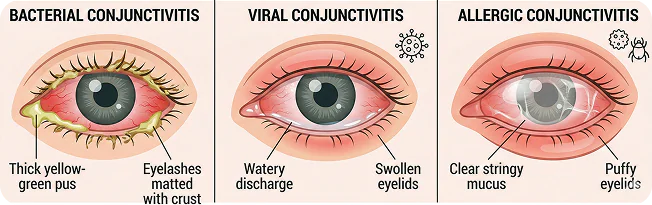
We’ll ask about symptom onset, discharge type, whether one or both eyes are affected, allergy history, and contact lens use. Treatment depends on the type:
Significant eye pain
Light sensitivity
Heavy discharge
Blurred vision that doesn’t improve with blinking or lubricating drops
Marked swelling around the eye
Symptoms worsening after a few days or not improving with home care
Glaucoma is a group of conditions that damage the optic nerve, the “cable” that carries visual signals from your eye to your brain. A clear fluid inside the eye should drain as new fluid is produced. When the drainage system isn’t working properly, pressure can rise and place strain on the optic nerve.
Because glaucoma often develops slowly and without pain, many people don’t realize they have it until some vision is already lost. While there’s no cure, early detection and treatment can slow or stop further damage.
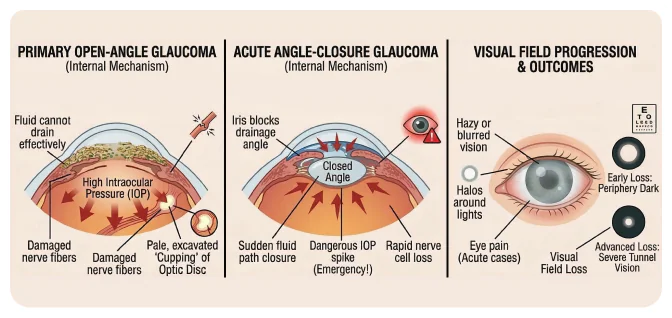
Because damage is irreversible, early detection and close monitoring are critical. Testing may include:
Ask questions. It’s normal to want clarity on your type, target pressure, and follow-up schedule.
Dry eye happens when your eyes don’t make enough tears, or when the tears they do make aren’t the right quality. A healthy tear film has three layers (oil, water, and mucus). When any layer is out of balance, symptoms can include burning, itching, redness, fluctuating or blurry vision, light sensitivity, gritty sensation, and even watery eyes.
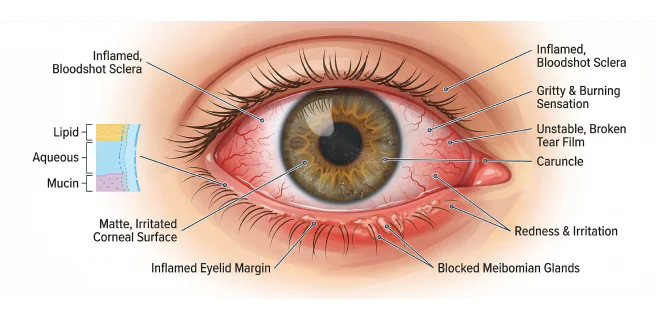
Dry eye feels different for everyone. We take time to listen, then pair your experience with testing to get the full picture.
Testing you may see:
Age and hormones, autoimmune/systemic conditions, eyelid conditions, contact lens wear, screen time and environment, eye surgery, and certain medications.
Dry eye may not always be “curable,” but it can be managed successfully with a tailored plan. Your plan may include:
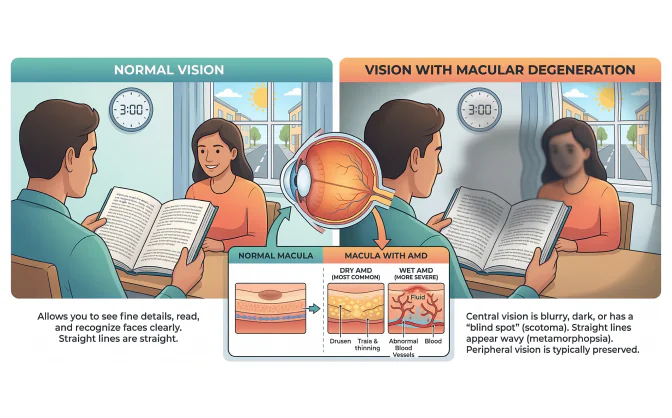
Age-related macular degeneration (AMD) is a leading cause of vision loss in adults over 50. It affects the macula, the central part of the retina responsible for sharp, straight-ahead vision. AMD can cause blurred or distorted central vision, while side vision usually remains intact.
Many people have the dry form, which progresses slowly. A smaller number have the wet form, which can progress more rapidly and may respond well to treatment if caught early. Early detection and monitoring help many people preserve meaningful vision.
Age 50+, family history, smoking (strong modifiable risk), cardiovascular factors, obesity and diet.
Dry AMD:
healthy habits, discussions about AREDS2 supplements when appropriate, monitoring, and support tools if central vision is affected.
Wet AMD:
coordination for timely anti-VEGF treatment and follow-up.
AREDS2 note (keep accurate, but patient-safe):
If recommended by your eye doctor, the AREDS2 formula may be appropriate for certain stages of AMD. Talk with us before starting any supplement, especially if you take other medications or have health conditions.
Dry (atrophic) AMD:
Most common, progresses gradually with drusen and thinning. Vitamins may help slow progression in certain stages, and advanced cases may have additional treatment options.
Wet (neovascular) AMD:
Less common but more vision-threatening. Abnormal blood vessels can leak under the macula, causing rapid distortion and vision loss. Often treated with anti-VEGF injections, commonly coordinated with a retinal specialist.
What to bring
Current glasses or contacts
Medication list and eye drops you use
Insurance card
Notes about symptoms (when they started, what makes them better or worse)
Book online or call and we’ll help you choose the right appointment type.