

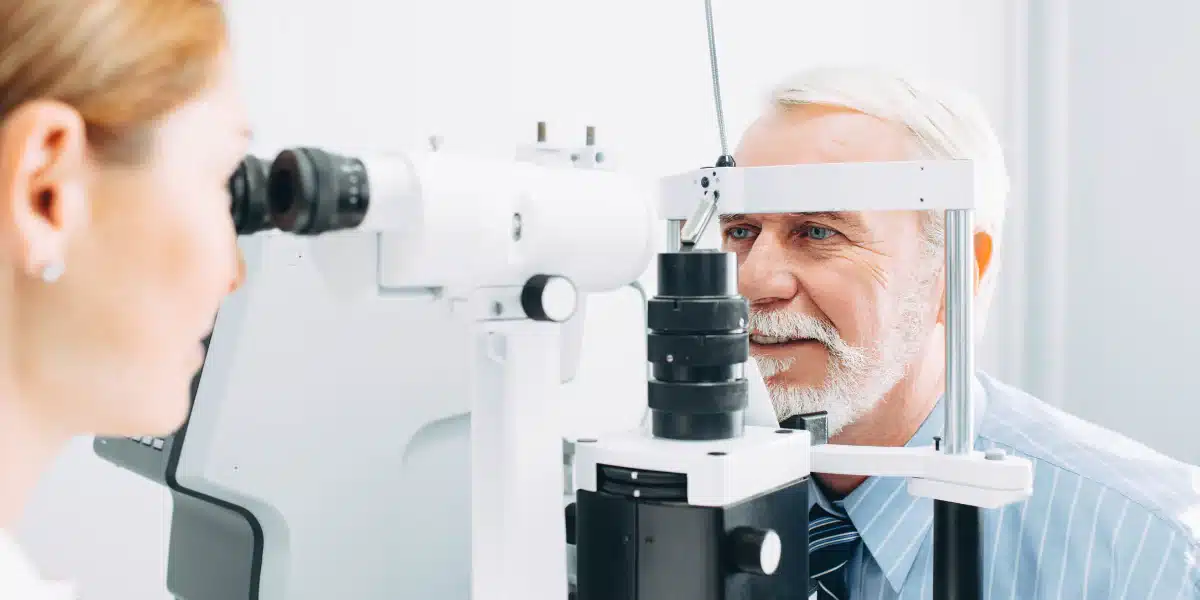
Diabetes does more than affect blood sugar. It quietly puts your eyes at risk, often years before you notice anything is wrong. A diabetic eye exam is the one tool that catches these changes early enough to do something about them. If you have type 1 or type 2 diabetes, this single yearly appointment could be the difference between keeping your eyesight and losing it.
Why Diabetes Is So Hard on Your Eyes
High blood sugar damages the tiny blood vessels inside your retina, the light-sensitive tissue at the back of your eye. Over time, those vessels can leak, swell, or close off completely. New, fragile vessels may grow in their place and bleed into the eye. The frustrating part is that most of this happens with zero symptoms. You can have moderate damage and still see perfectly fine on a Snellen chart at home.
That’s why a routine vision screening at the DMV isn’t enough. You need a dilated exam that lets your optometrist look at the back of the eye directly. People often delay because they feel fine, but by the time blurriness, floaters, or dark patches show up, the damage is usually advanced. If you want a refresher on how diabetes interacts with general eye health, check our guide to diabetic eye care for a deeper breakdown.
What Happens During a Diabetic Eye Exam
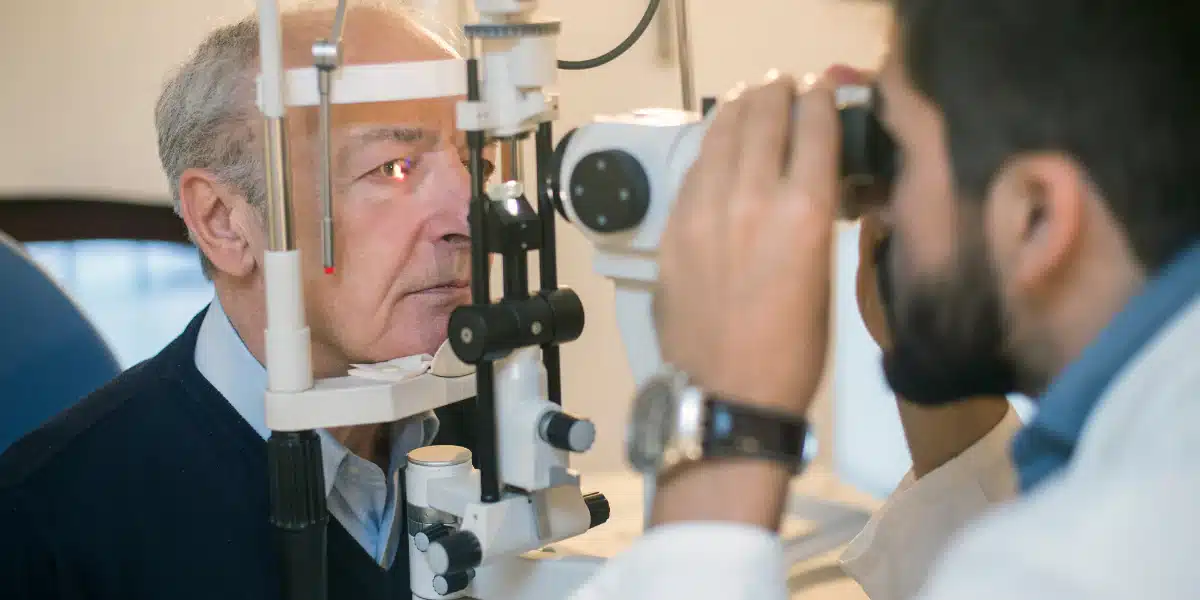
A diabetic eye exam goes well beyond a standard checkup. You can expect dilation drops to open your pupils, retinal imaging to capture detailed photos of the back of the eye, and often optical coherence tomography (OCT) to look at the retina in cross-section. Your optometrist will also check your pressure, refraction, and the health of your optic nerve.
The whole appointment usually takes 45 to 60 minutes, and your vision will be blurry for a few hours afterward from the dilation. Bring sunglasses and consider arranging a ride if you’re sensitive to bright light. If you’re new to the practice, our new patient information walks through paperwork and what to bring. Diabetic retinopathy screening is the core of the visit, but your doctor is also watching for cataracts, glaucoma, and macular edema, all of which show up more often in people with diabetes.
Catching Problems Before They Steal Your Sight
Here’s the part most people don’t hear enough: diabetic retinopathy is the leading cause of blindness in working-age adults, and yet it’s largely preventable when caught early. The team at Clear & Company Eye Care sees patients every week whose eye disease was found before they had a single symptom.
Early-stage retinopathy can often be managed by getting blood sugar, blood pressure, and cholesterol under control. More advanced cases may need laser treatment, injections, or surgery, and those options work best when started early. The gap between “I had no idea” and “we caught it in time” is almost always one yearly appointment. If you’ve been putting off scheduling, our page on comprehensive eye exams explains what’s included.
How Often You Should Actually Be Going
Most guidelines recommend a dilated diabetic eye exam at least once a year. If you’ve already been diagnosed with any level of retinopathy, your eye doctor may want to see you every three to six months. Pregnant women with diabetes need closer monitoring too, since pregnancy can accelerate retinal changes.
People with prediabetes shouldn’t ignore their eyes either. Subtle vascular changes can begin before a formal diabetes diagnosis, which is why your optometrist might recommend earlier baseline imaging. If you’re not sure where you stand, browse our eye conditions overview or call to talk through your history. And when you’re ready to lock in a date, you can use our appointment booking to get scheduled without going back and forth on the phone.
Your eyes are usually the first place diabetes shows its hand. Treat the yearly exam less like a chore and more like a checkpoint, the same way you’d treat an A1C test or a dental cleaning. One short visit a year is a small price for keeping the world in focus.
FAQs
- Is a diabetic eye exam different from a regular eye exam?
Yes. A regular exam focuses mostly on your prescription and general eye health, while a diabetic eye exam includes pupil dilation and retinal imaging to look for blood vessel damage at the back of the eye. It’s specifically designed to catch diabetic retinopathy and related complications.
- Will my insurance cover a diabetic eye exam?
In many cases, medical insurance covers a diabetic eye exam because it’s considered a medical evaluation rather than a routine vision check. Coverage depends on your plan and your diagnosis. Call your insurer or ask the front desk to verify benefits before your visit.
- How long does it take for symptoms of diabetic eye disease to appear?
That’s the tricky part. Symptoms like blurred vision, floaters, or dark spots usually show up only after significant damage has occurred. Many people have early-stage retinopathy with no warning signs at all, which is exactly why annual screening matters so much.
- Can controlling my blood sugar reverse eye damage?
Tight control of blood sugar, blood pressure, and cholesterol can slow or stop the progression of retinopathy, and in early stages some changes may even improve. Once damage is more advanced, lifestyle alone isn’t enough and you’ll likely need medical treatment alongside your management plan.
- Do I need to dilate my eyes every time?
For diabetic patients, dilation is the standard of care because it gives your doctor a much wider view of the retina. Some clinics offer wide-field retinal imaging that reduces the need for dilation in certain visits, but a fully dilated exam is still recommended at least once a year.
- What should I bring to my appointment?
Bring your current glasses or contacts, a list of medications, your most recent A1C reading if you have it, and your insurance card. Sunglasses are a good idea for the ride home since your eyes will be light-sensitive for several hours after dilation.
At Clear & Company Eye Care in Harrisburg, NC, we can help. Explore our diabetic eye exams services or book an appointment online — or call (704) 997-2020.