

Key Takeaways
- Wash and dry your hands, then inspect the lens for tears, debris, and correct orientation before it touches your eye.
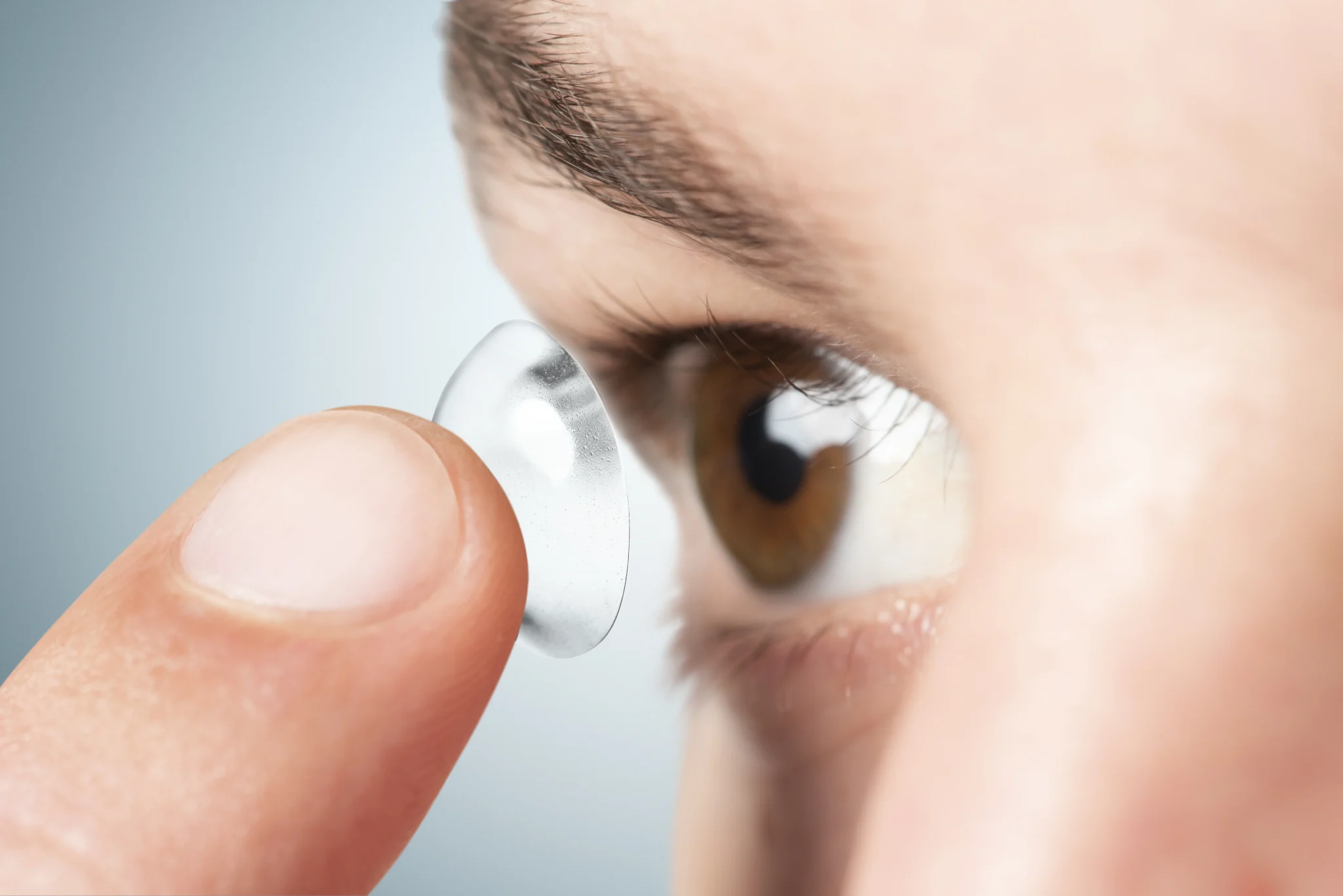
- Hold your upper and lower eyelids open, look straight ahead or slightly up, place the lens on your eye, then blink a few times to help it settle.
- Never rinse lenses with tap water, never sleep in lenses unless your doctor has approved overnight wear, and replace your lens case monthly.
- If a lens won’t sit right, feels uncomfortable, or your eye turns red or irritated, remove it, rinse with fresh solution, and call your eye doctor if the problem doesn’t clear.
- Most first-time wearers feel confident within their first week of regular practice.
Inserting a contact lens comes down to four things: clean hands, an inspected lens, open eyelids, and a steady hand. It’s normal to feel nervous about touching your own eye the first few times, most beginners do. But nearly every new wearer gets comfortable within a week of practice, and the steps below don’t change much once you’ve done them a handful of times. This guide walks through each step, along with the hygiene habits and troubleshooting tips the team at Clear & Company Eye Care in Harrisburg, NC shares with new contact lens wearers during fittings.
What Types of Contact Lenses Are There?
Not every contact lens is inserted, worn, or cared for the same way, so it helps to know which category you’re wearing before you start.
Clear & Company also fits scleral, hybrid, and orthokeratology (ortho-K) lenses for patients who don’t fit into a standard soft or RGP lens. If you’re not sure which category fits your eyes and lifestyle, a contact lens fitting evaluates your prescription, corneal shape, and daily habits to match you with the right option.
How Do You Prepare to Insert a Contact Lens?
Preparation prevents most first-time problems. Before you touch a lens:
- Wash your hands with soap and water, every time.
- Dry your hands with a lint-free towel, paper towels and some cloth towels shed fibers that stick to the lens.
- Set up a clean, flat, well-lit space with your lens case and solution within reach.
- Inspect the lens for tears, debris, or discoloration.
- Confirm the lens is right-side out: it should look like a smooth bowl, not flare outward at the edges.
- Stand in front of a mirror with good lighting.
How Do You Put a Contact Lens In?
- Start with the same eye every time (many wearers choose right first) so you build a consistent routine.
- Place the lens on your index finger, on your dominant hand, so it sits like a small cup on your fingertip.
- Hold your eyelids open, use your free hand to hold the upper lid, and a finger on your dominant hand to hold the lower lid.
- Look straight ahead or slightly upward and bring the lens to your eye slowly and steadily.
- Center the lens on your eye, then release your eyelids and blink a few times to help it settle into place.
If the lens feels off after you release your eyelids, don’t force it. Remove it, rinse it with fresh solution, and try again once it’s clean. Comfort matters more than speed, get one eye right before moving to the other.
What Mistakes Do Beginners Make When Inserting Contacts?
- Skipping the inspection step: a torn or debris-covered lens is one of the fastest ways to end up with an irritated eye.
- Letting the lens dry out before it goes in: a dry lens won’t sit comfortably and is more likely to fold or stick to your finger.
- An unsteady eyelid hold: if your hand shakes or you blink reflexively, practice holding your lids open in front of a mirror a few times before attempting insertion.
What Should You Do If a Lens Feels Uncomfortable or Won’t Go In?
- Lens feels uncomfortable or scratchy: remove it, rinse with fresh solution, check again for tears or debris, then reinsert.
- Lens folds or sticks to your finger: add a drop of solution to your fingertip to keep it moist and pliable.
- You keep blinking involuntarily: work in a well-lit room and take a breath before bringing the lens to your eye, tension makes blinking worse.
- Your eye turns red or painful, or vision blurs and doesn’t clear: remove the lens and call Clear & Company at 704-997-2020. Don’t wait it out with a lens still in.
How Do You Care for Contact Lenses and Protect Your Eyes?
Insertion technique only matters if the lens itself is handled safely day to day. Clear & Company’s contact lens fitting guidance includes these habits:
- Wash your hands every time, before handling lenses, no exceptions.
- Never sleep in your lenses unless your doctor has specifically approved overnight wear.
- Clean and store lenses with fresh solution each day, never reuse old solution.
- Replace your lens case monthly, or sooner if it’s cracked or looks dirty.
- Avoid water contact entirely, no swimming, showering, or rinsing lenses with tap water, which can carry organisms that cause serious eye infections.
- Be mindful of makeup and lotions, apply them after your lenses are in, and remove lenses before removing eye makeup, so residue doesn’t transfer onto the lens surface.
- If your eyes feel irritated, red, or your vision blurs, remove your lenses and call your eye doctor rather than waiting to see if it clears on its own.
If dry, gritty-feeling eyes are a regular issue with your lenses, some lens materials handle dryness better than others, see Best Contact Lenses for Dry Eyes [link once published] for options worth asking about at your next fitting. And if you’re deciding between replacement schedules, Daily vs. Monthly Contacts: Key Differences breaks down the cost and convenience trade-offs.
FAQs
1. Can a contact lens get lost behind my eye?
No. A thin membrane called the conjunctiva lines the inside of your eyelid and connects to the white of your eye, forming a closed pocket. A lens can slide around on the surface of your eye, but it physically cannot go behind it.
2. What if my eyes feel dry while wearing contacts?
Use rewetting drops made for contact lens wearers, and blink fully and often, especially during screen time. If dryness is a recurring problem rather than an occasional one, mention it at your next visit, a different lens material or replacement schedule may fit your eyes better.
3. Should I ever rinse my lenses with water?
No. Tap water, distilled water, and even bottled water aren’t sterile enough for contact lenses and can introduce organisms that cause serious infections. Use only the multipurpose or saline solution your doctor recommends.
4. What should I do if a lens falls out in public?
Carry a spare pair, a small bottle of solution, and your glasses as a backup. If a dropped lens is still intact, rinse it thoroughly with solution, never saliva or water, before reinserting.
5. Do I need to take my contacts out every night?
Yes, unless your doctor has specifically fitted and approved you for an extended-wear lens. Standard soft and RGP lenses are designed to come out before you sleep; wearing lenses overnight without approval significantly raises the risk of infection and irritation.
More questions about your specific lenses or prescription are answered on our full FAQ page.
When Should You See an Eye Doctor About Your Contacts?
Insertion gets easier with repetition, but recurring discomfort, redness, or blurry vision that doesn’t clear after removing your lenses isn’t something to push through, it’s worth a call. A proper contact lens fitting also matters more than most new wearers expect: lens fit, material, and prescription all affect daily comfort, not just clarity.
If you’re in the Harrisburg, NC area and are new to contacts or due for a fitting, book an appointment with our team, or call us at 704-997-2020.
Last updated: [confirm current month/year before publishing]