


If you have diabetes, your eye doctor wants to see you more often than the average patient, and there’s a real reason for that. High blood sugar quietly damages the tiny blood vessels at the back of your eyes long before you notice any change in your vision. By the time symptoms show up, the damage is usually harder to reverse. A diabetic eye exam in Charlotte NC is built specifically to catch those early changes. Whether you were just diagnosed or you’ve been managing diabetes for years, knowing what happens during the appointment helps you walk in prepared instead of nervous. Here’s how the visit actually goes, from check-in to checkout.
Why Diabetes Changes the Way Your Eyes Get Examined
Diabetes affects more than your blood sugar numbers. Over time, elevated glucose weakens the walls of the small blood vessels in your retina, the light-sensitive tissue at the back of your eye. Those vessels can leak, swell, or close off entirely. That’s called diabetic retinopathy, and it’s the leading cause of new blindness in working-age adults in the U.S.
Retinopathy isn’t the only worry. People with diabetes also face a higher risk of macular edema, which is swelling in the central part of the retina, along with cataracts that develop earlier in life and certain types of glaucoma. The frustrating part is that none of these conditions hurt in the early stages. Most don’t cause any noticeable vision change until they’re already advanced.
That’s why this kind of screening falls under medical eye care rather than a routine vision check. The doctor isn’t just measuring how clearly you see. They’re looking deep inside the eye for signs of vascular damage you can’t feel on your own. Annual screening is the standard recommendation from the American Diabetes Association, and your eye doctor may want to see you more often if anything turns up.
How a Diabetic Eye Exam Differs From a Standard Eye Exam
A regular vision check is mostly about your prescription. You read the chart, the doctor swaps lenses, and you walk out with an updated Rx. A thorough diabetic screening looks deeper. It still includes those vision and prescription steps, but the focus shifts to the health of the retina, the optic nerve, and the blood vessels inside the eye.
The biggest difference most patients notice is dilation. The doctor puts drops in your eyes that widen the pupils, giving them a clear view of the entire back of the eye. Without dilation, only a small portion of the retina is visible. Many practices also use imaging technology like Optical Coherence Tomography (OCT), which produces a high-resolution cross-section of the retinal layers, and fundus photography, which captures a wide-angle picture of the retina for comparison year over year.
For anyone serious about diabetic eye care Charlotte residents trust, this combination of dilation plus imaging is the gold standard. It catches changes earlier than a basic exam ever could, and it gives your endocrinologist or primary care doctor real data to coordinate your treatment.
Most patients still need an annual routine eye exam alongside diabetic screening, since prescriptions can shift as blood sugar levels fluctuate over time.
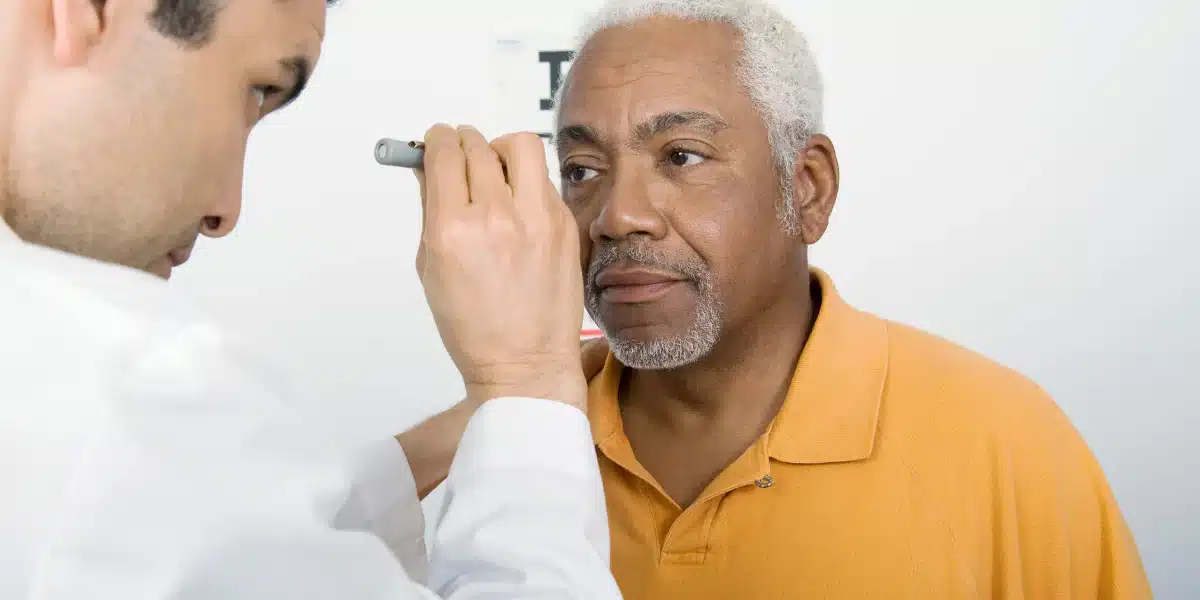
What Actually Happens During the Appointment
Here’s the typical flow, step by step, so nothing catches you off guard.
Check-in and history. You’ll be asked about your most recent A1C, how long you’ve had diabetes, your current medications, and any recent vision changes. Bring this information with you if you can. It saves time and helps the doctor build a complete picture.
Vision and pressure testing. A technician will check how well you see at distance and near, then measure the pressure inside your eyes. This pressure check screens for glaucoma, which diabetics develop more often than the general population.
Dilation. Drops go in. They sting for about ten seconds, then fade. After roughly 15 to 20 minutes, your pupils are wide enough for the doctor to see the retina clearly. Your vision will be blurry up close and sensitive to bright light for several hours afterward, so plan accordingly.
Retinal imaging. Most offices now take OCT scans and retinal photos as part of the visit. The scans are painless. You rest your chin on a support, stare at a target light, and the machine does the work in a few seconds.
The doctor’s exam. Using a slit lamp and a handheld lens, your optometrist examines the inside of each eye, looking for hemorrhages, microaneurysms, cotton-wool spots, swelling, or any new vessel growth. At Clear & Company Eye Care, this is the part of the visit where most of the diagnostic work happens, and your doctor will walk you through what they see in real time so you understand what’s going on inside your eyes.
Review and plan. At the end, you’ll go over the findings together. If everything looks stable, you’ll get a return date for next year. If something needs monitoring or treatment, the plan is laid out before you leave.
Preparing for Your Visit (and What Comes After)
A little prep makes the appointment go faster. Bring your current glasses or contacts, a list of your medications, and any recent notes from your endocrinologist or primary care doctor. If you know your latest A1C reading, write it down. And bring sunglasses, because your eyes will be light-sensitive on the drive home after dilation.
Most patients can drive home if conditions aren’t too bright, but if you’re worried about it, ask someone to come along. The dilation usually wears off in four to six hours. Reading and screen time will feel fuzzy during that window, so plan light tasks for the rest of the day.
How often you return depends on what the doctor finds. If your retina looks healthy and your diabetes is well controlled, once a year is standard. If there are early signs of retinopathy, you might come back every three to six months. If treatment is needed, such as laser therapy or injections, the doctor will refer you to a retinal specialist while continuing to coordinate your local diabetic eye care.
For coverage questions, the practice’s insurance and payment options page lays out major plans and Medicare specifics, since most diabetic screenings are billed as a medical visit rather than a vision benefit. When you’re ready, you can book an appointment online in about a minute.
Catching diabetic eye changes early is one of the most valuable things you can do for your long-term vision. The exam itself is short, it doesn’t hurt, and you’ll walk out with a clearer picture of how diabetes is affecting your eyes. Block off a couple of hours, bring sunglasses, and treat the appointment as part of your overall diabetes care, the same way you treat your A1C check.
FAQs
- How often should I get a diabetic eye exam?
For most adults with type 1 or type 2 diabetes, once a year is the standard recommendation. Your doctor may want to see you every three to six months if you have early signs of retinopathy, poorly controlled blood sugar, or you’re pregnant. Newly diagnosed type 2 patients should schedule a baseline exam right away, since many have undetected damage at the time of diagnosis. - Will my pupils have to be dilated?
Yes, in almost all cases. Dilation lets the doctor see the entire retina, which is the only way to reliably check for diabetic damage. Some clinics offer alternative wide-field imaging that can supplement the exam, but dilation is still the most thorough method and remains the standard for diabetic patients. - How long does the appointment take? Plan for about 60 to 90 minutes from check-in to checkout. The exam itself is shorter, but waiting for your pupils to fully dilate takes 15 to 20 minutes, and the doctor’s review and discussion at the end can add another 15. Bring a book or expect to relax in the chair for a bit.
- Will my insurance cover the exam? Diabetic eye exams are usually billed under medical insurance rather than vision insurance because they screen for disease. Most major medical plans, including Medicare, cover annual diabetic screenings. It’s worth calling your insurer ahead of time or checking with the front desk so there are no surprises at the appointment.
- Can I drive myself home after dilation? Most adults can, but expect bright sunlight and oncoming headlights to feel uncomfortable for several hours. Sunglasses help a lot. If you’re particularly sensitive to light or you’re a new driver, arrange a ride. Your near vision will also be blurry, so reading menus or screens will be tough until the drops wear off.
- What if my eyes feel fine? Do I still need the exam?
Yes. Diabetic retinopathy and other diabetes-related eye conditions often cause no symptoms in their early stages. By the time you notice blurred vision, floaters, or dark spots, the disease has usually advanced. The whole point of an annual screening is catching changes before you ever feel them, when treatment options are simpler and more effective.
At Clear & Company Eye Care in Harrisburg, NC, we can help. Explore our diabetic eye exams services or book an appointment online — or call (704) 997-2020.