

Key Takeaways
- A pediatric optometrist checks eye alignment, focusing, and tracking, not just visual acuity, catching issues a school screening misses.
- Comprehensive exams are recommended around 6–12 months, at age 3, before kindergarten, and annually afterward.
- A wandering or turned eye should be evaluated promptly, since delayed treatment can allow the brain to start ignoring input from that eye.
- Passing a school vision screening doesn’t rule out focusing, tracking, or binocular vision problems that affect reading.
- Pediatric optometrists handle routine exams, myopia management, and functional vision concerns, while pediatric ophthalmologists manage eye disease and surgery.
- Myopia management options, including specialty contact lenses and low-dose atropine, should be personalized and monitored with regular follow-up.
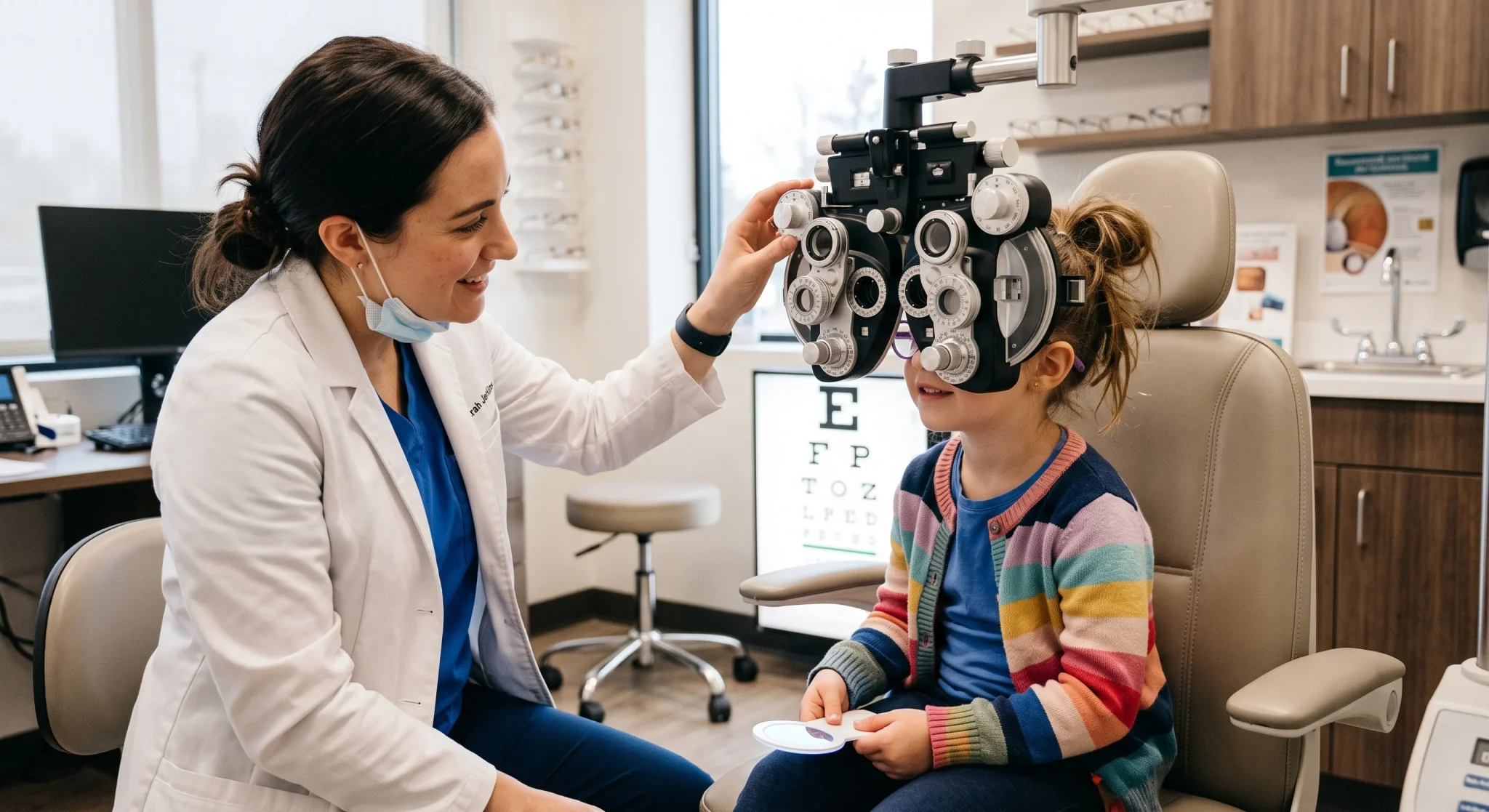
A pediatric optometrist evaluates far more than whether your child can read letters on a chart. A comprehensive children’s exam checks visual acuity, eye alignment, focusing, tracking, and depth perception, all of which affect how a child reads and learns, and none of which a school vision screening measures. Families searching for a pediatric optometrist near me, a kids eye doctor near me, or pediatric vision near me are usually looking for exactly this kind of thorough evaluation, not just a quick screening.
What Does a Pediatric Optometrist Check During an Exam?
A pediatric eye doctor specializes in evaluating and managing vision in infants, toddlers, children, and teens. A comprehensive pediatric exam measures:
- Visual acuity, how clearly your child sees
- Eye alignment and eye teaming (binocular vision)
- Focusing and flexibility (accommodative function)
- Eye movements for reading (tracking)
- Depth perception
- Eye health, front and back of the eye
- Prescription needs for glasses or contacts
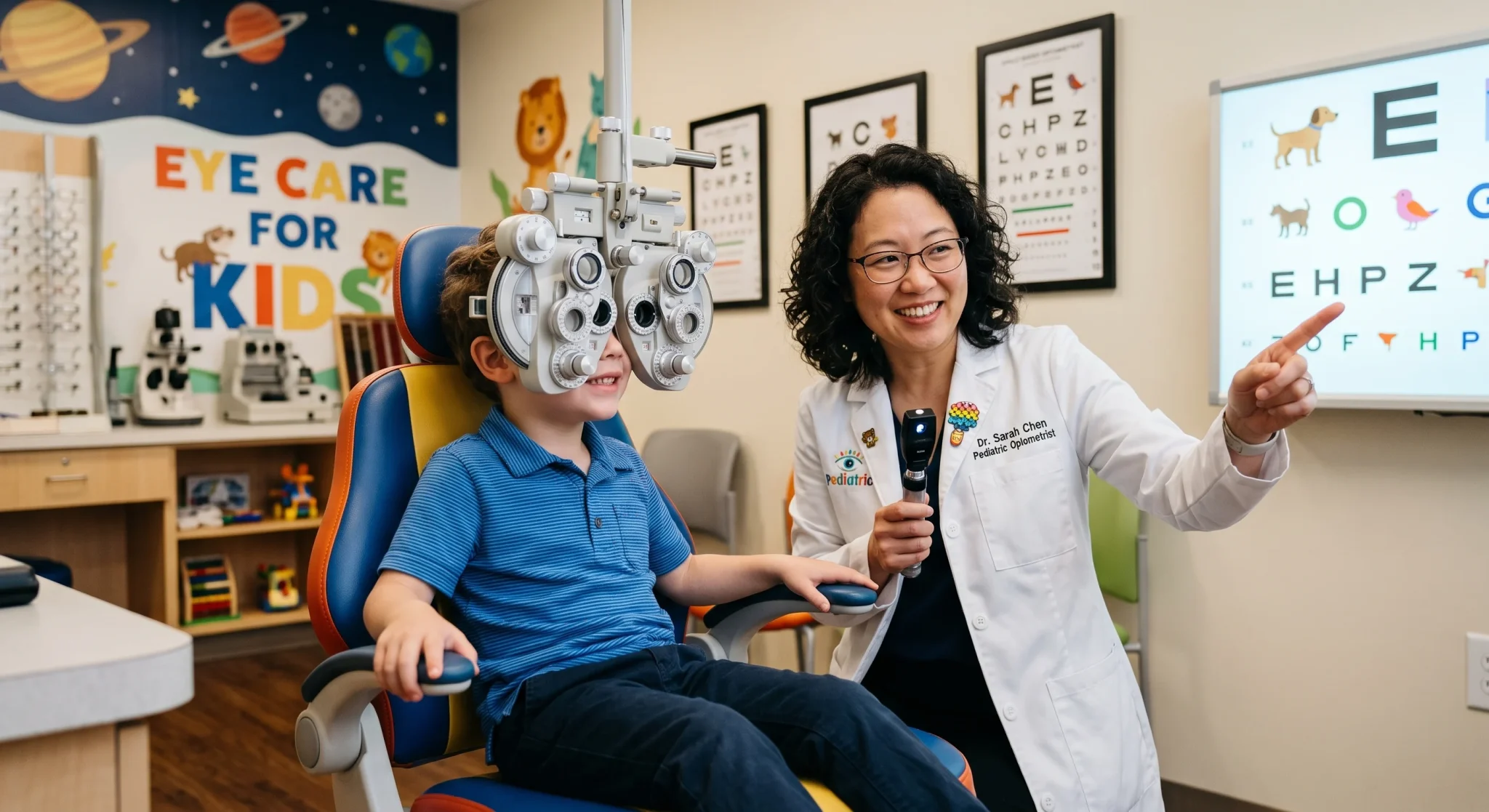
Many families start with comprehensive children’s eye care after a teacher raises a concern, a pediatrician notes an issue, or a child struggles with reading. The visit is built around comfort, using games, symbols, and age-appropriate tools rather than relying only on letter charts.
Pediatric Optometrist vs. Pediatric Ophthalmologist: Who Should You See?
The right provider depends on your child’s specific needs. Many children benefit from collaborative care, with an optometrist co-managing alongside an ophthalmologist when medical treatment or surgery is needed.
When Should Kids Get Eye Exams? A Pediatric Eye Exam Schedule
- 6–12 months: early check of eye alignment, tracking, and development
- Age 3: first full, cooperative exam for many kids
- Before kindergarten (age 5–6): a baseline for learning and reading readiness
- School age: annually, or as recommended, especially with myopia, eye teaming issues, or learning-related concerns
If you’re searching for a pediatric eye exam near me for the first time, age 3 and the year before kindergarten are two of the most common starting points. Even if your child passes a school screening, they can still have focusing, tracking, or binocular vision issues that affect reading stamina and comfort.
What Are the Signs of Vision Problems in Children?
- Squinting, covering an eye, or tilting the head
- Frequent headaches or eye strain
- Sitting very close to screens or holding books too close
- Losing their place when reading or skipping lines
- Avoiding near work or short attention for reading
- Watery eyes, excessive blinking, or rubbing eyes
- Complaints of double vision or words appearing to move
- Clumsiness or poor catching/ball skills
- A wandering eye or eye turn (possible strabismus)
An eye that visibly wanders or turns shouldn’t wait for a routine appointment, since a developing brain can begin ignoring input from that eye the longer it goes unaddressed.
My Child Failed a Vision Screening. What Are the Next Steps?
- Schedule a comprehensive exam with a pediatric optometrist.
- Bring the screening results, including distance/near acuity and any alignment notes.
- Share observations: reading struggles, headaches, an eye turn, or family history.
- Ask for a clear plan: diagnosis, treatment options, follow-up timing, and what improvement should look like.
A child may fail a screening due to nearsightedness, astigmatism, farsightedness, eye teaming issues, focusing problems, or amblyopia (reduced vision in one eye).
How Is Amblyopia (Lazy Eye) Treated in Young Children?
Amblyopia is reduced vision in one eye because the brain favors the other. Treatment tends to work best when started early, since the visual system is still highly adaptable. Options may include glasses, patching the stronger eye, or in some cases prescription eye drops, and outcomes depend on the underlying cause and how consistently treatment is followed at home.
What Is Pediatric Vision Therapy, and Does My Child Need It?
Some children see 20/20 on a chart but still struggle because their eyes don’t coordinate well, showing up as fatigue, slow homework, or reading avoidance. Functional issues like convergence insufficiency, poor tracking, or focusing inflexibility fall into this category. Vision therapy is a structured program aimed at improving eye teaming, tracking, and focusing, sometimes described as physical therapy for the visual system.
[Confirm with the practice whether vision therapy is provided in-house or coordinated through referral, this piece should only describe what’s actually offered at Clear & Co.] Not every child needs therapy, and it isn’t a replacement for glasses when a prescription is the actual issue, a pediatric optometrist determines whether it’s appropriate for your child’s specific diagnosis.
What Are the Options for Childhood Myopia Management?
Nearsightedness often progresses through childhood and early teens. Depending on the child, myopia management options may include specialty soft contact lenses, orthokeratology (overnight lenses that temporarily reshape the cornea), low-dose atropine drops, and lifestyle guidance like more outdoor time. Management should be personalized and monitored regularly, since comfort, safety, and prescription changes all matter over time.
How Do I Make My Child’s First Pair of Glasses a Smooth Transition?
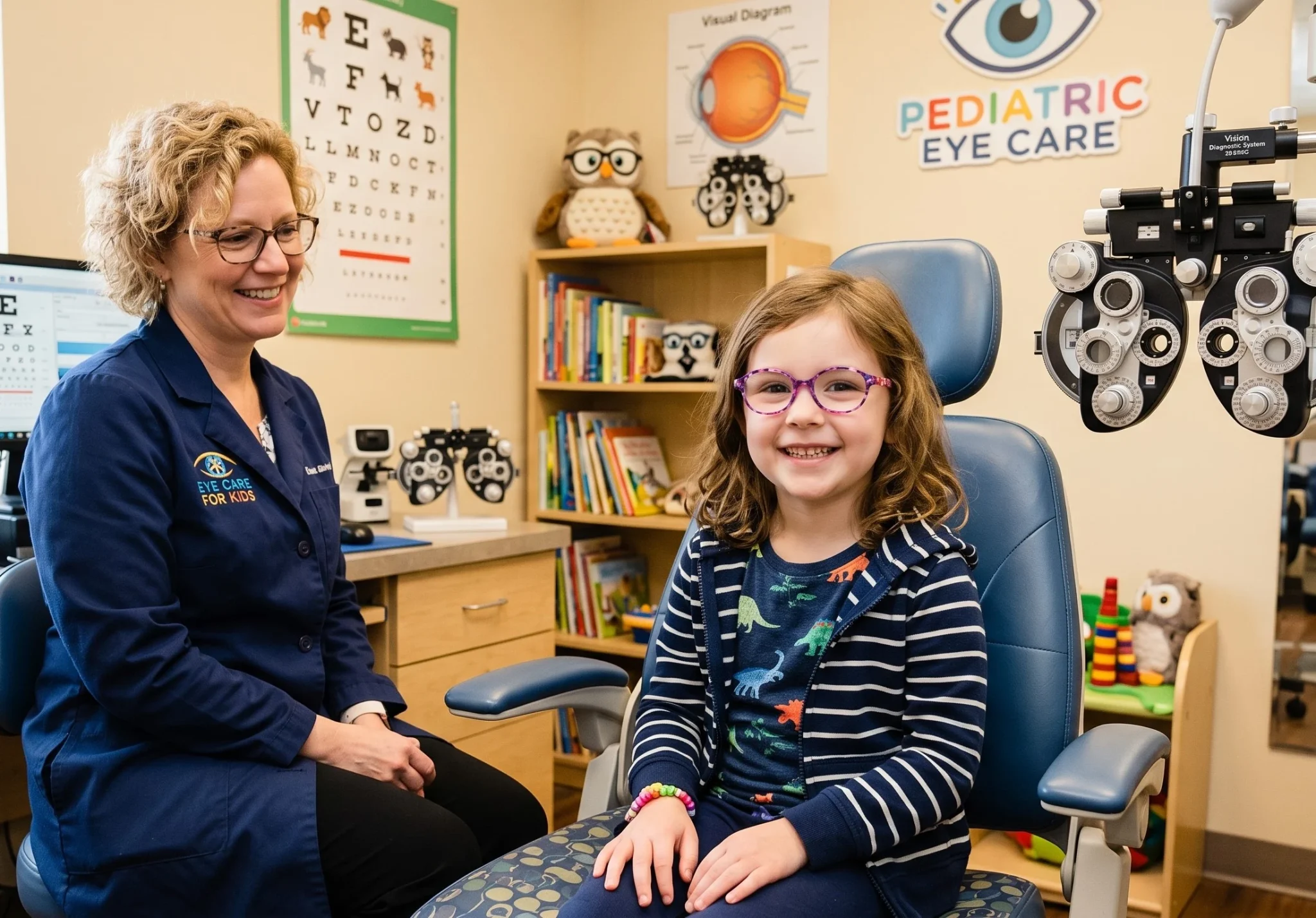
- Let them choose between 2–3 parent-approved frames, ownership boosts wear
- Confirm proper fit: adjustable nose pads, correct temple length, comfortable bridge
- Choose durable lenses and coatings, scratch resistance is worth it
- Build a consistent glasses routine at home
- Expect a short adaptation period, a few days is common
If your child refuses to wear glasses, mention it to your eye doctor, fit or prescription issues are often fixable.
Are Contact Lenses Safe for Children?
Age matters less than maturity, hygiene, and supervision. Readiness signs include reliably washing hands, following step-by-step instructions, and understanding not to sleep in lenses unless ortho-k is specifically prescribed. Contact lens fittings for kids typically walk through cleaning routines and follow-up schedules in detail, and daily disposable lenses often simplify hygiene for younger wearers.
How Do I Prepare My Child for Their First Eye Exam?
- Explain simply: “the doctor will play seeing games and look at how your eyes work”
- Avoid promising there will be no drops, they may be needed sometimes
- Bring snacks, comfort items, and any glasses your child already wears
- Note behaviors you’ve noticed: headaches, squinting, rubbing eyes, reading avoidance
- Schedule when your child is typically well-rested
Clear & Company Eye Care’s team is used to wiggles, shyness, and big feelings, especially with toddlers, so a first visit is built around keeping kids comfortable rather than rushing through tests.
A pediatric optometrist plays a central role in guiding visual development, from routine exams to diagnosing coordination issues and building a practical treatment plan. If your child is struggling, has an eye turn, failed a screening, or you’re simply due for a checkup, Dr. Taylor Randich and the team can provide clarity often sooner than families expect.
FAQs
1. What does a pediatric optometrist check that a school screening doesn’t?
A pediatric optometrist checks eye alignment, focusing, tracking, and depth perception in addition to visual acuity, all of which affect reading and learning but aren’t measured by a basic school screening.
2. Should I see a pediatric optometrist or ophthalmologist for my child?
A pediatric optometrist handles routine exams, prescriptions, and functional vision concerns, while a pediatric ophthalmologist manages eye disease, injuries, and surgical care. Many children are seen by both through coordinated care when needed.
3. At what age should my child have their first eye exam?
An initial check around 6 to 12 months, a full cooperative exam around age 3, and a baseline exam before kindergarten are typical starting points, with annual exams recommended afterward.
4. What happens if my child fails a school vision screening?
A failed screening should be followed by a comprehensive exam with a pediatric optometrist, since screenings flag a possible problem but don’t diagnose the cause. Bring the screening results and any symptoms you’ve noticed to that visit.
5. What is amblyopia and can it be treated?
Amblyopia, or lazy eye, is reduced vision in one eye because the brain favors the other. It’s treated with glasses, patching, or in some cases prescription drops, and outcomes are generally better the earlier treatment begins.
6. How do I know if my child needs vision therapy?
Vision therapy is typically considered when a child has normal visual acuity but struggles with eye teaming, tracking, or focusing during near work. A comprehensive exam is needed to determine whether this applies to your child’s specific situation.
7. Is there a kids eye doctor near me that handles more than routine screenings?
Yes, a pediatric optometrist is trained specifically to evaluate functional vision issues like eye teaming and tracking, not just basic acuity, which is the main gap in most routine school or pediatrician screenings.