

Key Takeaways
- Pink eye has three main causes, viral, bacterial, and allergic, and telling them apart determines the right treatment.
- Viral and bacterial conjunctivitis are highly contagious and spread through direct contact with eye secretions; allergic conjunctivitis isn’t contagious at all.
- Severe pain, sudden vision changes, intense light sensitivity, or spreading swelling are red flags that need urgent attention, not home care.
- Contact lens wearers should remove lenses at the first sign of redness and discard that pair rather than reusing it.
- Bacterial pink eye typically improves within a couple of days of starting antibiotic drops; viral cases can take one to two weeks to resolve on their own.
- Symptoms lasting more than two to three days without improvement warrant an actual exam rather than continued home care.
Waking up with a red, gunky eye is one of those things that makes you want an answer fast: is this pink eye, or something that needs more than eye drops? If you’re searching for pink eye treatment near me, you’re probably trying to figure out two things at once, whether it’s contagious and whether it’s serious. Here’s a practical way to tell the difference, plus what actually helps once you know what you’re dealing with.
Not All Red Eyes Are the Same Kind of Pink Eye
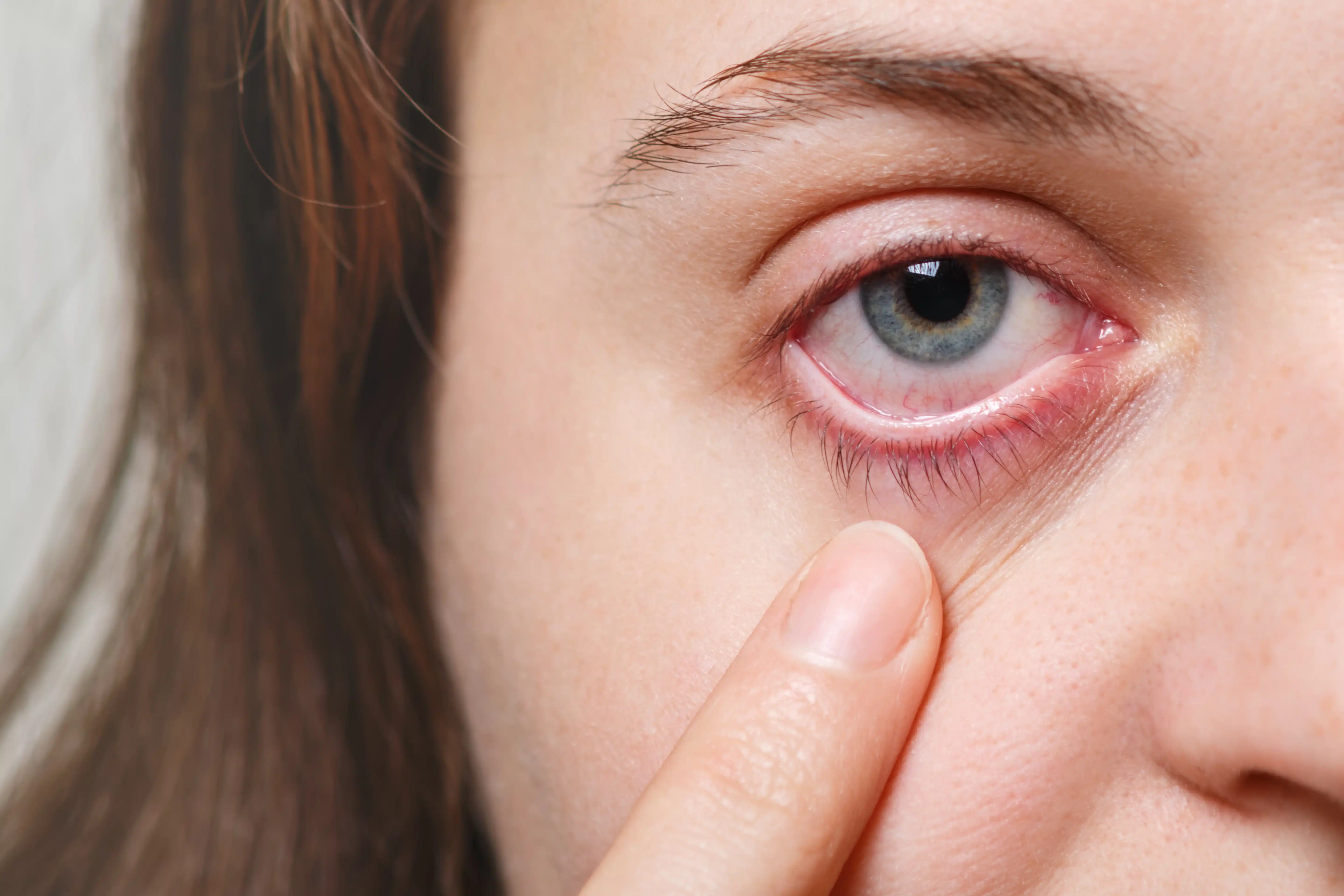
Conjunctivitis is really an umbrella term, and the cause changes everything about how it behaves. Viral pink eye tends to start in one eye and often spreads to the other within a day or two, usually alongside a cold or scratchy throat, most often caused by adenoviruses. Bacterial conjunctivitis looks different, with thicker, yellow-green discharge and eyelids genuinely stuck shut in the morning, and it tends to occur more frequently from December through April (CDC). Allergic conjunctivitis is the odd one out because it isn’t contagious at all, it shows up in both eyes at once and tracks with pollen season or a specific irritant.
How Fast Pink Eye Spreads, and Where People Usually Catch It
Viral and bacterial conjunctivitis spread through direct contact with eye secretions, and that contact doesn’t have to be dramatic. Rubbing your eye, then touching a doorknob, phone, or shared pen is enough to pass it along. Contact lens wearers face a bit more exposure here, since lenses and cases can hold onto bacteria if hands aren’t clean during insertion and removal, which is one of several reasons routine contact lens fittings include hygiene guidance rather than just a prescription check.
Schools and daycares are notorious for outbreaks, partly because kids touch their faces constantly and partly because close-quarters play means shared surfaces everywhere. If your child comes home with a red, watery eye, it’s worth a same-week evaluation through children’s eye care rather than waiting to see if it clears on its own, since most schools require a note before a child can return to class anyway.
When to Call Us vs. When to Go to the ER
This is the distinction that actually matters most, and it’s simpler than it sounds. Straightforward pink eye, meaning redness, some discharge, and mild irritation without major pain or vision changes, is exactly the kind of thing an eye infection treatment visit in Harrisburg, NC should cover. A same-day or next-day appointment lets us confirm the cause and get you the right treatment instead of guessing with over-the-counter drops that may not match what’s actually going on.
Certain symptoms cross a different line entirely. Severe eye pain, sudden vision changes, intense light sensitivity, or swelling that’s spreading beyond the eyelid aren’t typical pink eye behavior, and they warrant urgent attention rather than a wait-and-see approach. Dr. Taylor Randich built Clear & Co. around exactly this kind of judgment call, helping patients figure out quickly whether something needs a same-day office visit or genuinely belongs in an emergency room. If you’re ever unsure which category your symptoms fall into, our emergency eye care guidance walks through the warning signs that mean don’t wait.
Treating It Without Making It Worse
Whatever the cause, a few habits help regardless of which type of conjunctivitis you’re dealing with. Cool compresses ease itching and irritation from viral or allergic pink eye, while warm compresses tend to feel better for bacterial cases with thicker discharge, especially first thing in the morning. Skip the old advice about using the same washcloth on both eyes, since that’s actually a common way infection spreads from one eye to the other (CDC).
If you wear contacts, pull them out at the first sign of redness and don’t put them back in until symptoms have fully cleared, since wearing lenses over an active infection can prolong healing or make it worse. Throw away that pair rather than trying to disinfect and reuse them. At Clear & Company Eye Care, this is one of the first things we check during a pink eye visit, because a lot of lingering cases turn out to be a lens hygiene issue rather than treatment resistance. For anything beyond mild, short-lived symptoms, our medical eye care page has the full breakdown of causes, symptoms, and treatment options if you want to look deeper before your visit.
Pink eye is rarely dangerous, but it spreads fast and it’s easy to mistreat if you’re guessing at the cause. Knowing what type you’re likely dealing with, and knowing when symptoms have crossed into urgent territory, saves you time and keeps it from spreading through your household or classroom. If your eye hasn’t improved in a couple of days or something feels off, don’t just wait it out.
FAQs
1. How long is pink eye contagious?
Viral and bacterial conjunctivitis are typically contagious as long as there’s active discharge, which for bacterial cases usually clears within 24 hours of starting antibiotic drops. Viral cases can remain contagious for a week or longer, since there’s no medication that speeds up the virus itself.
2. Can I treat pink eye with drops I already have at home?
Only if they’re specifically artificial tears or a prescription you were previously given for the same issue. Old antibiotic drops or someone else’s prescription can mask symptoms without actually treating the underlying cause, which just delays proper care.
3. Should my child stay home from school with pink eye?
Most schools require kids to stay home until 24 hours after starting antibiotic treatment for bacterial conjunctivitis, or until discharge and redness have resolved for viral cases. Check with your school directly, since policies vary by district.
4. Is it pink eye or just allergies?
Allergic conjunctivitis usually affects both eyes at once, causes intense itching over pain, and often comes with sneezing or a runny nose. If only one eye is affected or there’s noticeable discharge, it’s more likely viral or bacterial than allergy-related.
5. Can pink eye come back after it clears up?
Yes, especially if the original cause wasn’t fully addressed, like continuing to wear the same contact lenses that carried the infection or being re-exposed to an allergen. Recurring cases are worth a proper evaluation rather than repeating the same home care each time.
6. When should I stop waiting and just come in?
If symptoms haven’t started improving within two to three days, if discharge is getting heavier rather than lighter, or if you notice any pain, light sensitivity, or vision changes, it’s time for an actual exam rather than more home care. Catching a bacterial infection early with the right drops is a lot faster than letting it drag on.