
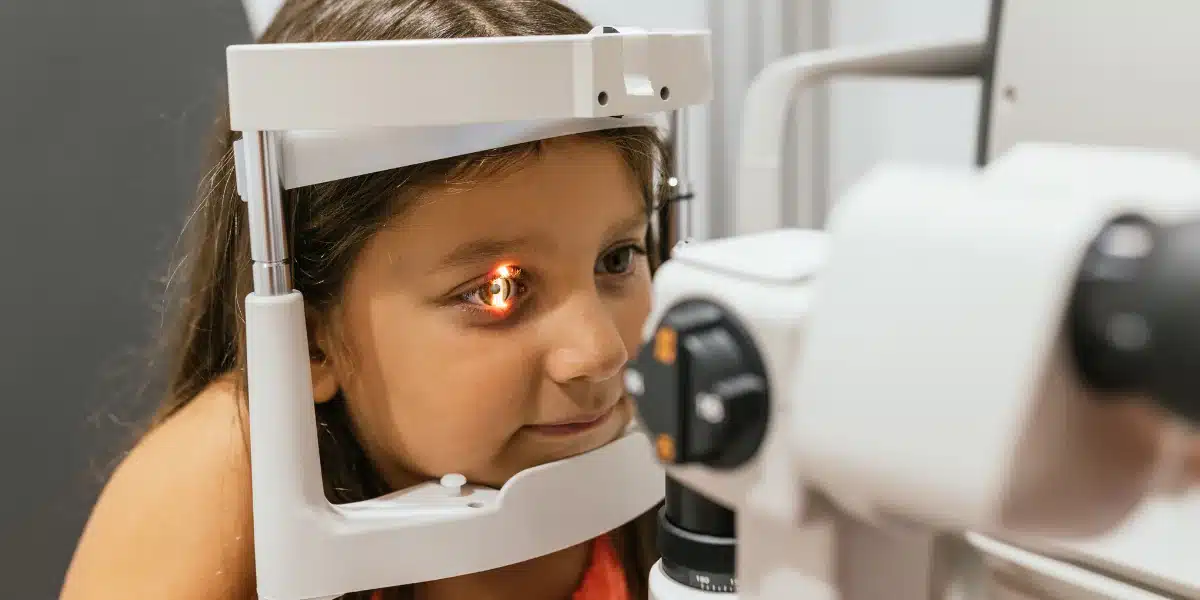
Your child’s eyes are working overtime. Between schoolwork, screens, sports, and play, those little eyes take on more than most parents realize – and the data shows it. The American Optometric Association reports that roughly 1 in 4 school-age children has an undiagnosed vision problem that can affect their learning, behavior, and confidence (American Optometric Association, 2024).
Children’s eye care isn’t just about glasses or annual checkups. It’s about building habits early so vision problems get caught – and prevented – before they shape how a child sees the world. Below are five tips every parent should know.
Key Takeaways
- Nearly 1 in 4 school-age kids has an undetected vision issue (AOA, 2024).
- Childhood myopia is projected to affect 50% of the global population by 2050 (WHO, 2023).
- Two hours of daily outdoor play can cut a child’s myopia risk significantly.
- Regular pediatric eye exams catch problems screen tests miss.
1. Schedule Regular Pediatric Eye Exams – Not Just Vision Screenings
In 2024, the American Academy of Ophthalmology reaffirmed that comprehensive eye exams detect up to 60% more vision issues than standard school screenings (American Academy of Ophthalmology, 2024). Screenings spot the obvious cases. Full exams catch the ones that quietly hold kids back.
Most pediatricians recommend a first eye exam around six months, another at age three, and then before kindergarten. After that? Every one to two years, even if your child says they can see fine. Kids rarely know what “normal” vision looks like – if they’ve always seen blurry, they won’t think to mention it.
Our finding: At Clear & Co., we regularly see kids who passed their school screening but turn out to have significant focusing or alignment issues during a full exam. Parents are often surprised. The child rarely is – they just thought reading was supposed to feel hard.
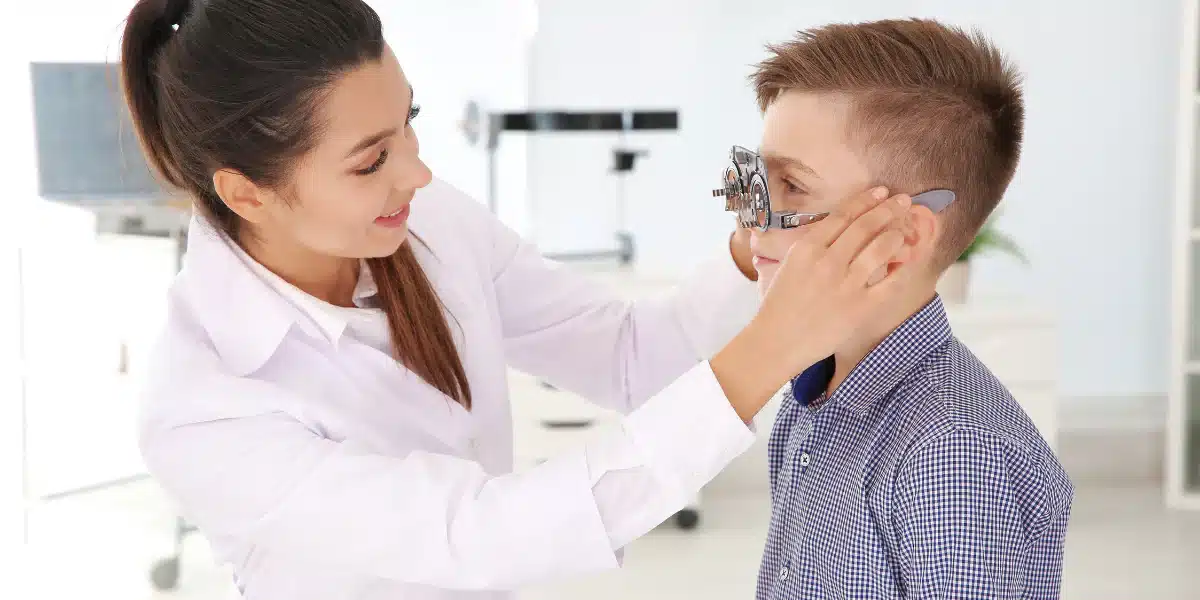
A proper exam checks far more than letter charts. Eye teaming, depth perception, color vision, and eye health all get evaluated, painting a complete picture of your child’s visual development.
2. Manage Screen Time and Teach the 20-20-20 Rule
Kids today spend an average of 7+ hours a day looking at screens, and that number jumped sharply after 2020 (Common Sense Media, 2023). All that close-up focus puts real strain on developing eyes, contributing to digital eye fatigue, dry eyes, and even faster myopia progression.
The fix isn’t to banish screens. It’s to use them smarter. The 20-20-20 rule works beautifully for children: every 20 minutes of screen use, take a 20-second break and look at something 20 feet away. It sounds small, but that micro-break lets the eyes’ focusing muscles fully relax.
A few other practical guardrails worth setting:
- Keep screens at least an arm’s length from the eyes.
- Adjust brightness so the screen matches the room – not brighter, not dimmer.
- No screens for at least one hour before bed (blue light disrupts sleep, and tired eyes blink less).
- Encourage blinking. Yes, really – kids blink up to 60% less when staring at screens.
If your child reads on a tablet, larger text and a slight downward gaze angle make a noticeable difference. Small tweaks, big payoff over years.
3. Get Kids Outside Every Day
Here’s a tip most parents have never heard from an eye doctor: send your kids outside. A landmark study found that children who spent 40+ minutes outdoors daily had a 23% lower rate of myopia onset compared to peers who stayed indoors (JAMA Ophthalmology, 2015).
Natural light appears to help the eye develop in healthier proportions, reducing the elongation that causes nearsightedness. Researchers are still untangling the exact mechanism – but the protective effect is consistent across studies in multiple countries.
What’s the goal? Aim for at least 90 minutes to 2 hours of outdoor time per day, whether that’s structured sports, biking, or just unstructured backyard play. Cloudy days count. Recess counts. Walking to school counts.
This matters especially for children with one or both parents who wear glasses, since myopia has a strong genetic component. Outdoor time won’t override genetics entirely, but it gives kids a measurable buffer during the critical years when their eyes are still developing.
If your child is already showing early myopia, an eye care provider can discuss treatment options like specialty contact lenses or low-dose atropine drops alongside lifestyle changes. The earlier you intervene, the better the long-term outcome.
4. Feed Their Eyes With the Right Foods
Vision-friendly nutrition isn’t a marketing slogan – it’s well-established science. The Mayo Clinic reports that diets rich in lutein, zeaxanthin, omega-3s, and vitamins A, C, and E support healthy retinal development and reduce long-term eye disease risk (Mayo Clinic, 2023).
The good news? You don’t need supplements or fancy ingredients. Most eye-healthy foods are already in your fridge:
- Leafy greens (spinach, kale) – packed with lutein and zeaxanthin
- Carrots, sweet potatoes, and squash – loaded with beta-carotene (vitamin A)
- Eggs – one of the richest sources of zeaxanthin
- Salmon, sardines, and walnuts – omega-3s for retinal health
- Citrus and berries – vitamin C for blood vessel strength in the eye
- Almonds and sunflower seeds – vitamin E, a key antioxidant
Hydration matters too. Mildly dehydrated kids are more prone to dry, irritated eyes – especially during long screen sessions or sports practice.
You don’t need to overhaul every meal. Just aim for color and variety. A plate that looks like a rainbow is usually a plate that’s working hard for your child’s eyes.
5. Protect Their Eyes From UV Light and Injuries
Sun damage to the eyes is cumulative, and up to 80% of a person’s lifetime UV exposure to the eyes happens before age 18 (American Academy of Ophthalmology, 2023). Yet most kids never wear sunglasses. That’s a quiet but serious problem.
A good pair of children’s sunglasses should block 100% of UVA and UVB rays – and yes, the label matters more than the price tag. Wraparound styles offer the best protection because they shield light from the sides. A wide-brimmed hat layered on top is even better.
Eye injuries are the other half of this conversation. Sports-related eye injuries send roughly 30,000 kids to the ER every year in the U.S. alone – and around 90% of them are preventable with proper protective eyewear (Prevent Blindness, 2024). Polycarbonate sports goggles aren’t just for varsity athletes. If your child plays baseball, basketball, lacrosse, or soccer, they need them.
A few household safety habits matter too. Store sharp tools out of reach, supervise fireworks and air pressure toys, and teach kids never to look directly at the sun, lasers, or welding sparks. It only takes a moment.
Frequently Asked Questions
At what age should a child have their first eye exam?
The American Optometric Association recommends a baseline eye exam between 6 and 12 months, a follow-up at age 3, and another before kindergarten (AOA, 2024). After that, every 1–2 years is standard – more often if your child wears glasses, has a family history of vision problems, or shows signs of trouble.
How can I tell if my child needs glasses?
Watch for squinting, sitting too close to screens, head tilting, frequent eye rubbing, headaches, or trouble reading the board at school. According to the CDC, about 6% of children ages 6–17 wear glasses or contacts, but many more need them and don’t have them (CDC, 2023). When in doubt, book a comprehensive exam.
Is screen time really that bad for kids’ eyes?
It’s not the screens themselves – it’s how kids use them. The American Academy of Pediatrics links prolonged near-work to faster myopia progression, especially without outdoor balance (AAP, 2024). Breaks, distance, lighting, and outdoor time all help offset the strain of daily screen use.
Caring for Your Child’s Vision Starts Today
Healthy eyes are built through small, consistent habits – exams, outdoor time, smart screen use, good food, and protective eyewear. None of it is complicated. All of it adds up.
At Clear & Co., we work with families to make children’s eye care simple, comfortable, and tailored to each stage of growth. Whether it’s your child’s first exam or a routine update to their prescription, we’d love to help.
Book your child’s eye exam with Clear & Co. today – because clearer vision is one of the best gifts a parent can give.
At Clear & Company Eye Care in Harrisburg, NC, we can help. Explore our children’s eye care services or book an appointment online — or call (704) 997-2020.